When Water Gets In: How a Small Leak Turns Into a Big Repair
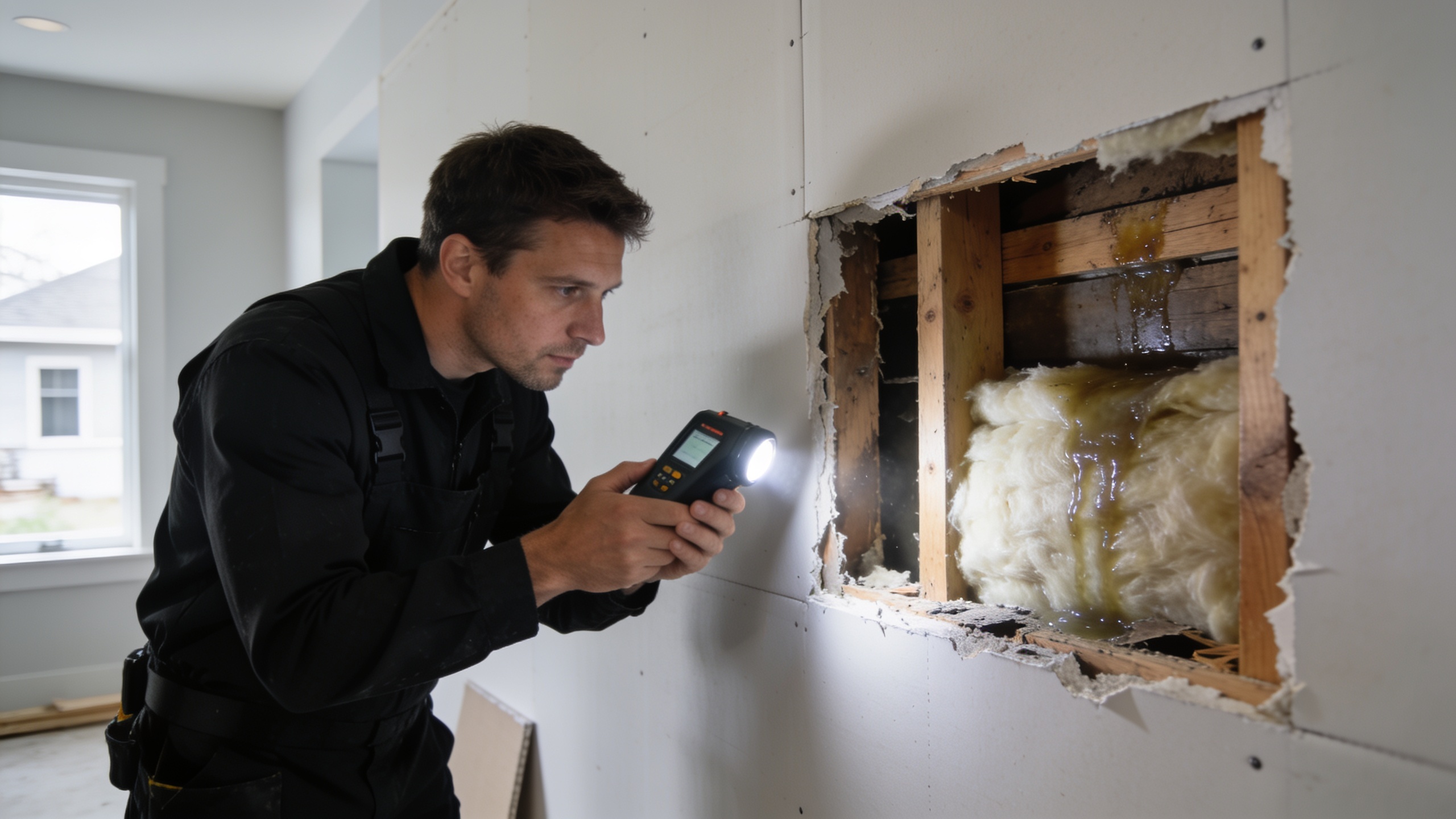
Water is the most patient kind of damage. It does not break down a door. It waits. A slow leak can run for weeks behind a wall before anyone sees a stain, and by then the cheap fix is long gone. Water damage is one of the most common and most expensive problems a property owner will ever file a claim for, and the average water related claim runs well into five figures. The repair you could have made for a few hundred dollars becomes a job across framing, insulation, drywall, and flooring.
Here is the part that should get your attention. Mold can begin to grow within 24 to 48 hours of water exposure. That means the clock starts the moment water gets in, not the moment you notice it. The difference between a dry-out and a demolition is often just a few days and whether anyone was paying attention.
If our roof check covered how to spot trouble up top, think of this as what happens after water gets past it. Here is how to catch it before it spreads.
Water Does Not Stay Where It Lands
The biggest mistake owners make is assuming the wet spot is the problem. It almost never is. Water follows gravity and the path of least resistance. It runs along beams, drips onto insulation, and pools inside wall cavities far from where it first got in. A stain on a ceiling is rarely directly below the leak. It is just the first place the water had nowhere left to go.
That is why a small leak is so dangerous. By the time it is visible, it has usually been working out of sight for a while. The surface you can see is the smallest part of the job.
The First 48 Hours Decide the Cost
Water damage is one of the few building problems where the clock is the enemy. In the first day, you have a wet material that can often be dried and saved. Within 24 to 48 hours, mold begins to grow, drywall starts to swell, and wood begins to hold moisture it will not give back on its own. After a few weeks, you are no longer drying things out. You are cutting them out and replacing them.
This is why response time matters more than almost anything else with water. The owners who keep a small problem small are the ones who move fast.
What to Look For Inside
You do not need special tools to catch most water problems early. You need to know what you are looking at.
Stains and rings. A brown or yellow ring on a ceiling or wall means water has already found its way in. It will keep spreading until the source is found.
Soft or sagging spots. A ceiling or floor that gives a little underfoot or overhead is holding water. That is a call-someone-now sign, not a wait-and-see one.
A musty smell. If a room smells damp or earthy and you cannot see why, you are likely smelling mold growing somewhere you cannot see.
Peeling paint or bubbling. Paint that blisters, bubbles, or peels is being pushed off the wall by moisture behind it.
Rising utility bills. Wet insulation stops insulating. If heating or cooling costs climb for no clear reason, moisture may be the hidden cause.
Not sure how your property stacks up? Take our free 3-minute readiness quiz. It walks the same weak spots we check first and gives you a personalized action plan on the spot.
Take the 3-Minute Readiness Quiz
Why Owners With Many Units Should Pay Extra Attention
If you manage apartments, rentals, or commercial space, water is a portfolio problem, not a single repair. One slow leak in one unit is a bad week. The same aging plumbing, the same worn roof, and the same tired seals across ten or fifty units is a wave of claims waiting for the same storm or the same cold snap.
The owners who come through it best are not the ones scrambling for a contractor while water spreads. They are the ones who already have a maintenance partner who knows their buildings, has records on every unit, and can move the moment water shows up. They get dried out first. They keep tenants in place. They keep earning.
Repair or Restoration: Who to Call
When water gets in, the temptation is to patch the spot you can see and move on. The problem is that the visible damage is almost never the whole job. A quick patch over a wet wall traps the moisture and feeds the mold you cannot see yet.
A general contractor who knows buildings can find where the water actually came from, open up only what needs opening, dry the structure properly, and put it back right. When the leak has spread into framing, insulation, or subfloor, you want the contractor who can see and handle the whole picture, not just the stain on the surface.
How a Conversation With Rigel Builders Works
If you think water may be getting in somewhere, reach out. Start with a conversation. We will tell you what we see, where we think the water is coming from, and what needs to happen first. We are not here to sell you a job you do not need. We are here to help you protect what you own before a small leak becomes a big one.
We also offer 24/7 emergency response for water, storm, fire, and structural problems, so a leak that starts on a weekend does not have to wait until Monday to be handled.
For owners with a portfolio of properties, our Property Partnership Program puts a standing maintenance partner behind your buildings all year. Members get scheduled inspections, priority response, predictable pricing, and a documented file on every building. So when water shows up, you are not starting from zero.
Rigel Builders is a licensed, insured, Service-Disabled Veteran-Owned general contractor. We handle residential renovations, commercial buildouts, new construction, and property maintenance, and we protect property with the same discipline we learned in service.
A short conversation now can save you from a long, expensive recovery later. Email us at info@rigelbuilders.com, use the contact page, or book a scoping call and we will find the water before it finds the rest of your building.
Think Water May Be Getting In Somewhere?
One building or a portfolio of them, reach out and we will tell you what we see, where we think the water is coming from, and what needs to happen first. No pressure, no sales pitch for a job you do not need.