Repair or Rebuild? How to Know What You Are Actually Dealing With After Water Damage
Last time, we walked through how a small roof problem becomes a big one. A shingle lifts, a nail works loose, and water finds a way in. Here is the part that comes after, and it is the part most owners are not prepared for.
The leak is stopped. Now what?
This is where a lot of property owners make an expensive mistake. They assume that fixing the source of the water means the job is done. It does not. Stopping the leak and repairing the damage the leak caused are two separate scopes of work.
Two Jobs. One Event.
A roofer patches the entry point. That is their scope. Once the roof is sealed, their work is complete.
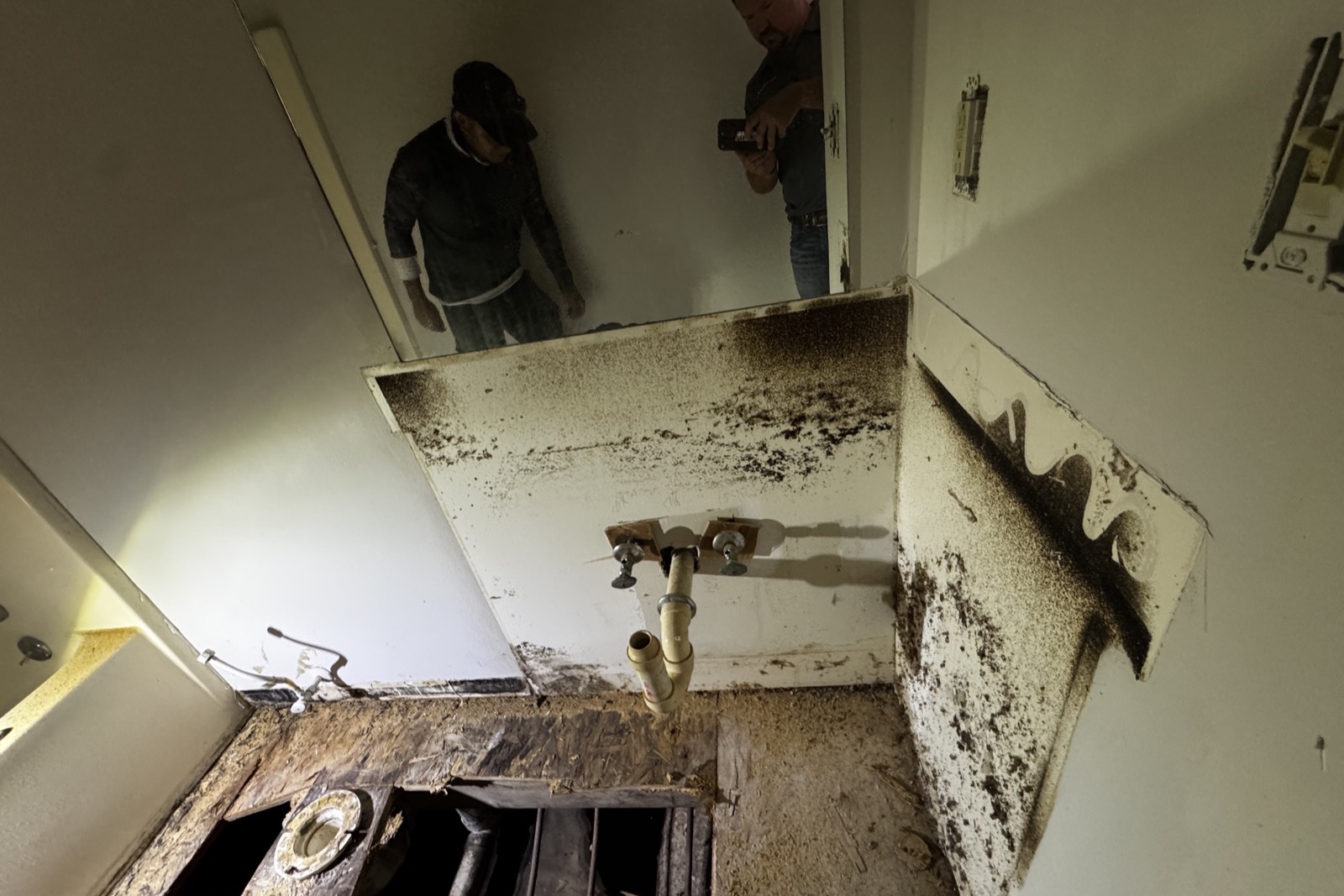
But the water that got in did not stop when the shingle was replaced. It traveled. It ran along beams, soaked into insulation, sat inside walls, and worked its way toward the subfloor. All of that happened while the roof looked fine from the street.
Fixing the roof does not dry the wall. Replacing a shingle does not address mold that may be growing behind the drywall. If you have not read how a hidden leak spreads, that is the story this one picks up from.
Four Signals That Tell You Which Scope You Are In
How long the water was present
Hours matter more than almost anything else. If a leak is caught within 24 hours and dried thoroughly, the scope stays manageable. Once water sits for several days, materials absorb it completely. Drywall, insulation, and subfloor that have been saturated for more than 48 to 72 hours almost always need to come out, not just dry out.
Mitigation work, which is extraction and drying, typically runs $3.75 to $7.00 per square foot. Once materials need to be replaced, reconstruction costs jump to $10 to $30 per square foot. That difference is driven almost entirely by how long the water sat.
What the water actually reached
Wet drywall is a repair. Wet framing is a different conversation. When water reaches the structural members of a building, the assessment changes from surface repair to structural evaluation. A general contractor follows the full path of the damage, not just the point of entry.
Whether mold is present
Mold can begin to grow within 24 to 48 hours of water exposure, according to EPA guidance. Once mold is present, remediation must happen before any rebuild work starts. Building over active mold creates a health hazard and a future liability. Mold remediation adds an average of $1,200 to $3,750 on top of the base restoration cost, according to HomeAdvisor data.
How many building systems are involved
A single stained ceiling tile is a straightforward fix. Water that has moved through a ceiling into walls, reached the subfloor, soaked insulation, and gotten near electrical or HVAC components is a multi trade scope. Each system has to be assessed and addressed in order. Miss one, and the problem returns.
What a Scoping Visit Looks Like
Before any repair work starts, a qualified builder walks the full damage path. Not just the ceiling stain. Not just the roof. The full path from where the water entered to where it stopped moving.
This visit answers the actual question: are we looking at a repair or a rebuild? It happens before a crew picks up a single tool, and it is the step that separates a managed project from an escalating one.
Why Owners With Multiple Units Should Pay Extra Attention
On a single family home, a leak is relatively contained. On a multi unit property, one unaddressed entry point can affect several units, shared walls, common areas, and structural members before it ever shows up as a visible stain. The scoping process is not optional at this scale. It is what separates a repair estimate from an uncontrolled project.
Water does not respect unit lines. In multi story buildings, a second floor leak has often already traveled to the first floor by the time someone calls.
How a Conversation With Rigel Builders Works
We do not show up with a pitch. We show up to look at the property and tell you what is actually going on. If it is a small repair, we will say that. If the scope is larger, we walk you through exactly why, what it involves, and what it will cost, before anything starts.
We are a general contractor, which means we do not just seal the entry point. We follow the water. We are licensed, bonded, and insured, SDVOSB certified, with more than 200 projects behind us, a 5.0 Google rating, and a 95 percent referral rate. Every repair is backed by our 30 day workmanship guarantee.
We also offer 24/7 emergency response for water, storm, fire, and structural problems, so a leak that starts on a weekend does not have to wait until Monday.
For owners with more than one building, our Property Partnership Program puts a standing maintenance partner behind your property all year, with scheduled inspections, priority response, and a documented file on every building.
If something does not look right after a storm or leak event, reach out. Email us at info@rigelbuilders.com, use the contact page, or book a scoping call and we will tell you what we see.
Not Sure If You Are Looking at a Repair or a Rebuild?
Reach out and we will walk the property, follow the full path of the damage, and tell you what is actually going on. If it is a small repair, we will say so. No pressure, no pitch for a job you do not need.