Four Key Factors When Building an Automotive Manufacturing Facility
The automotive industry plays a crucial role in driving economic growth and technological advancement. Constructing automotive manufacturing and industrial facilities requires careful planning and attention to several key factors. In this post, we’ll walk through four essential considerations for projects like these — the same factors Rigel Builders weighs on every industrial build. Get them right and you’ll ensure a successful facility, optimize productivity, and maintain a competitive edge in the dynamic automotive sector.
1. Strategic Location
Selecting the right location is paramount when constructing automotive manufacturing and industrial facilities. Several factors influence this decision — proximity to the market, availability of skilled labor, access to transportation networks, and existing infrastructure. Key points to consider:
- Market proximity. Build close to your target market to reduce transportation costs and improve supply chain efficiency. Being closer to customers also enables faster response times and stronger customer satisfaction.
- Skilled workforce. Assess the availability of a skilled labor pool in the area. Access to a qualified workforce with automotive industry expertise keeps operations smooth and productivity high.
- Transportation infrastructure. Evaluate road, rail, and port access. Efficient logistics and distribution networks are critical for receiving raw materials and delivering finished products.
2. Efficient Facility Design
Designing a facility that maximizes efficiency and productivity is essential. Consider the following during the design phase:
- Layout optimization. Develop a layout that minimizes material movement, reduces production bottlenecks, and streamlines workflow. Lean manufacturing principles help enhance efficiency and eliminate waste.
- Flexibility and scalability. Design for future growth and changing production needs. Flexible layouts and modular construction allow for easy reconfiguration and expansion as market demands shift.
- Safety and ergonomics. Prioritize worker safety by building in appropriate safety measures and ergonomic considerations. A safe working environment minimizes risk and promotes employee well-being.
3. Advanced Technology Integration

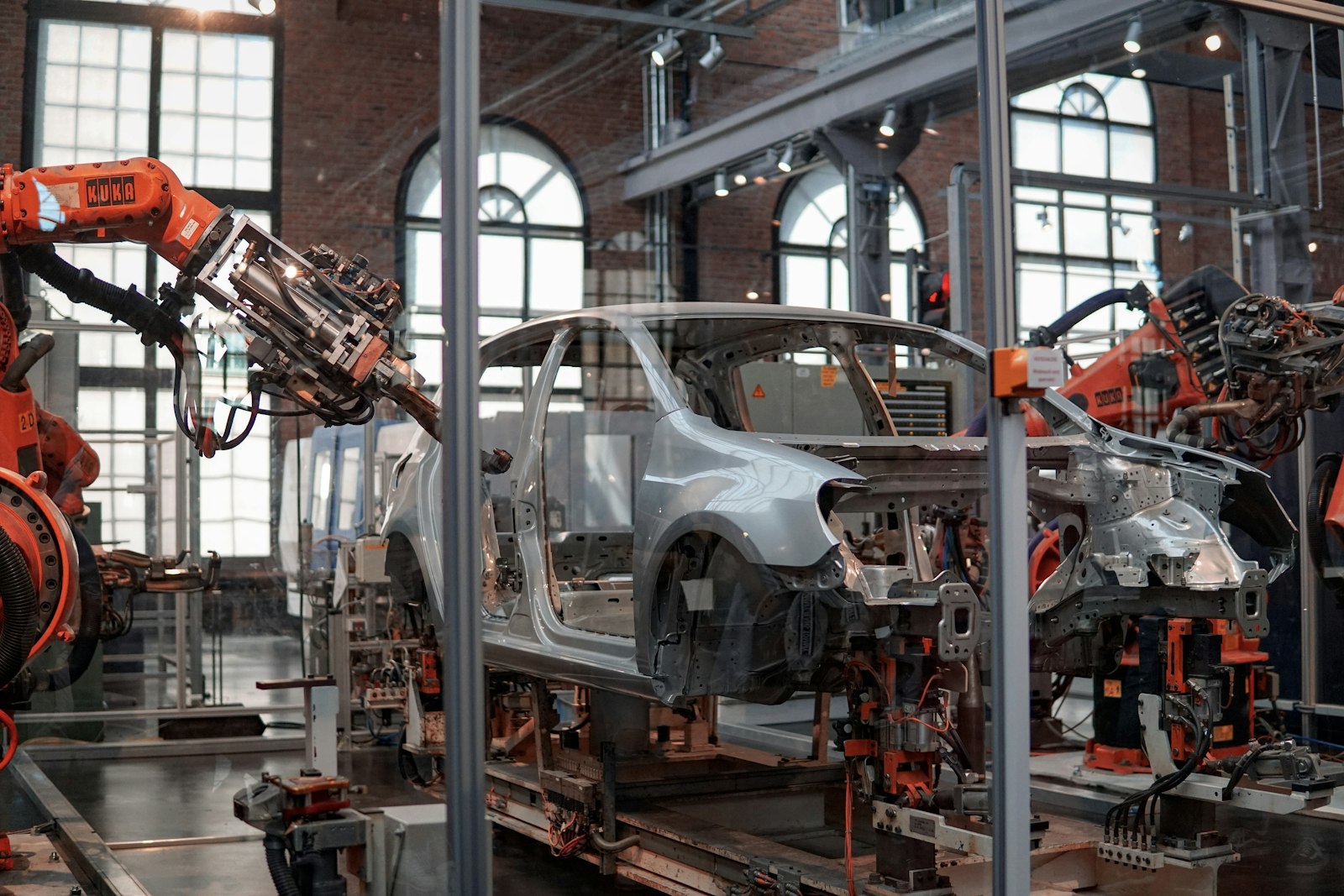
- Automation and robotics. Incorporate automation and robotics to enhance production efficiency, improve quality control, and reduce human error. Automated processes increase output while maintaining high product standards.
- Data analytics and connectivity. Implement data analytics tools and connectivity solutions to collect, analyze, and act on real-time data for process optimization, predictive maintenance, and supply chain management. Harnessing data leads to better decisions and improved operational efficiency.
- Internet of Things (IoT). Use IoT devices and sensors to monitor equipment performance, track inventory, and optimize energy consumption — enabling real-time monitoring, predictive maintenance, and tighter production control.
4. Regulatory Compliance and Sustainability
Complying with regulations and prioritizing sustainability are fundamental for automotive manufacturing and industrial facilities. Keep the following in mind:
- Regulatory requirements. Ensure compliance with local, regional, and national regulations covering environmental standards, health and safety, labor laws, and building codes. Failure to comply can result in penalties, legal issues, and reputational damage.
- Environmental impact. Implement measures to minimize your facility’s environmental footprint — sustainable construction materials, water conservation systems, energy-efficient machinery, and waste reduction strategies.
- Green certifications. Pursue certifications such as LEED (Leadership in Energy and Environmental Design) or BREEAM (Building Research Establishment Environmental Assessment Method) to demonstrate your commitment to sustainability. These can strengthen your reputation and attract eco-conscious partners and customers.
The Bottom Line
Constructing automotive manufacturing and industrial facilities demands an approach that weighs location, efficient design, advanced technology, and regulatory compliance together. Pay careful attention to these four factors and you can ensure a successful facility, optimize productivity, and contribute to the growth and sustainability of the automotive industry — staying competitive and ready to meet the evolving demands of the market.
Rigel Builders brings hard-earned judgment to industrial and manufacturing construction across Tennessee and Kentucky — from facility expansions and central utility plants to corporate headquarters and ground-up builds. Contact us at info@rigelbuilders.com to discuss your specific needs and explore how we can collaborate. Let Rigel Builders be your trusted partner in building your ideal facility.
Planning an Industrial or Manufacturing Build?
Rigel Builders delivers industrial and commercial construction across Tennessee & Kentucky — from facility expansions to ground-up builds. Let's scope your project together. No pressure, no long pitch.